Introduction
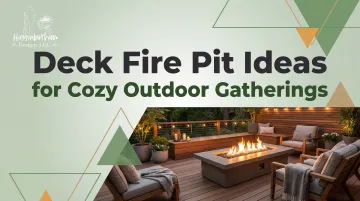
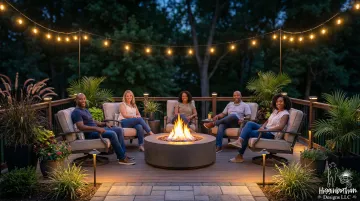
Picture this: a cool Georgia evening, family and friends gathered around a glowing fire pit on your beautifully designed deck, warmth drawing everyone together for conversation and laughter. Many Marietta homeowners dream of this scene but hesitate, unsure where to start safely or which style fits their space.
The two biggest concerns are fire risk on wood or composite decks, and not knowing which fire pit type suits your deck's design and structural limits. With the right precautions, materials, and planning, a fire pit can become the centerpiece of your outdoor entertaining space.
This guide covers what you need to know before you build:
- Fire pit types and which work best on decks
- Design ideas for different deck styles and sizes
- Safety guidelines and deck material considerations
- Tips for creating a complete outdoor space that's beautiful and code-compliant
Key Takeaways
- Gas and propane fire pits are the safer choice for wood or composite decks — they produce no embers, sparks, or ash
- Local codes vary: most require 10-foot minimum clearance from structures, while Cobb County sets 25 feet for recreational fires — always check before you build
- Always place a fire-resistant mat or heat shield under any fire pit on a deck surface
- Integrated stone or paver landing pads offer a durable, code-friendly foundation built directly into your deck design
- Professional installation ensures safety compliance and a polished, cohesive look
Types of Deck Fire Pits to Consider
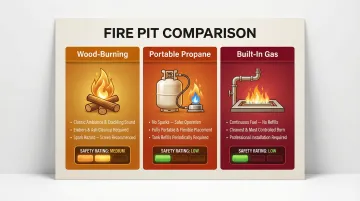
The fuel type you choose determines safety, maintenance, and overall ambiance. Wood-burning fire pits deliver the classic crackling sound and campfire experience, but they produce embers and ash that pose real risk on decks. Gas and propane options burn cleaner, offer instant on/off control, and eliminate flying sparks—making them the safer choice for combustible deck surfaces. Gas and propane options burn cleaner, offer instant on/off control, and eliminate flying sparks—making them the safer choice for combustible deck surfaces. The three main categories below cover the full range, from flexible portable units to fully integrated built-in designs.
Portable Propane Fire Pits
Portable propane fire pits rank among the most popular deck options for good reason. They require no permanent installation, move easily when you rearrange furniture, and come in styles ranging from sleek bowl designs to functional table-top units with built-in surfaces for drinks and snacks.
Key advantages:
- No gas line required—just connect a standard 20-lb propane tank
- Available in BTU ranges from 10,000 (compact tabletop models) to 60,000+ (full-size units)
- Price points start around $200 and scale with size and features
- CSA/ANSI Z21.97 certified models meet outdoor decorative gas appliance standards
Trade-offs to consider:
- Propane tanks require periodic refills (typically every 8-12 hours of burn time)
- Flame height is generally lower than built-in gas options
- Aesthetic may feel less permanent or custom
For homeowners who want to test the fire pit experience before committing to a permanent installation, portable propane models offer flexibility and lower upfront investment.
Built-In Gas Fire Pits and Fire Tables
When you're ready to move beyond portable, built-in gas fire pit tables and inserts offer a polished, permanent look that can be tailored to match your deck's aesthetic. Popular finishes include concrete, natural stone surrounds, and powder-coated metal frames—each offering distinct visual appeal.
These units require a natural gas line connection from your home's supply, which means professional installation is typically required. A licensed plumber or gas contractor must trench the line, install shutoff valves, and ensure the system meets ANSI Z223.1/NFPA 54 (National Fuel Gas Code) requirements. Local permit and inspection requirements apply, so confirm specifics with your contractor before work begins.
Benefits of built-in gas:
- No tank refills—continuous fuel supply from your home's gas line
- Generally more cost-effective to operate long-term than propane
- Clean, controlled flame with simple ignition systems
- Can be integrated into custom hardscape designs with stone or concrete surrounds
Installation requirements:
- Mechanical permit required in Marietta and Cobb County
- Professional gas line installation and inspection
- Typical clearances: 24-48 inches from sides, 72-120 inches overhead (varies by manufacturer)
Higginbotham Design, a Belgard Authorized Contractor with 35+ years of local experience, handles the full scope of built-in gas fire feature projects—from permit coordination to final installation—so these requirements don't fall on the homeowner to navigate alone.
Raised Deck Fire Pit Zones and In-Ground Adjacent Designs
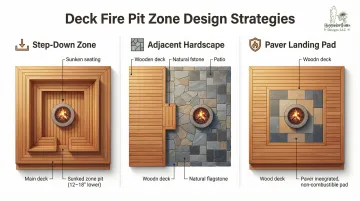
One of the most striking—and safest—design approaches involves creating a dedicated fire pit zone that's structurally separate from the main deck surface. For multi-level decks, this might mean lowering one section specifically as a fire pit area, creating both a safety buffer and a natural conversation pit layout.
Design strategies:
- Step-down zones: Lower a section of the deck 12-18 inches to create a sunken fire pit area with built-in bench seating around the perimeter
- Adjacent hardscape: For ground-level decks or those with connected patio areas, place the fire pit on the hardscape (stone, pavers, or concrete) rather than directly on the deck surface
- Paver landing pads: Integrate a non-combustible Belgard paver section directly into the deck design as a designated fire pit zone
This approach offers significant safety advantages: the fire pit sits on a non-combustible surface, structural weight loads are distributed to the ground rather than deck framing, and the visual separation clearly defines the fire zone. For homeowners planning new deck construction or major renovations, this design strategy is worth serious consideration.
Deck Fire Pit Safety Rules Every Homeowner Should Know
Before you purchase any fire pit, check local codes and HOA guidelines. In Marietta and Cobb County, open-flame regulations vary, and permits are required for permanent gas installations. Ignoring these rules can result in fines, insurance complications, or orders to remove non-compliant installations.
Critical clearance distances:
Three different standards set the floor for safe placement:
- U.S. Fire Administration: 10 feet minimum from structures (walls, railings, overhangs, furniture)
- International Fire Code: 15 feet for portable outdoor fireplaces
- Cobb County: 25 feet for recreational fires
Always default to the strictest applicable rule.
Your fire pit's owner's manual specifies manufacturer clearances—typically 24-48 inches from sides and 72-120 inches overhead for gas models. These must be followed to maintain ANSI Z21.97 certification and avoid voiding warranties.
Ember protection for wood-burning pits:
If you choose a wood-burning fire pit (not recommended for direct deck placement), a spark screen is essential. Even with screens, embers can escape. Place a fire-resistant pad or heat shield beneath the unit to protect the deck surface from radiant heat and stray embers. Effective materials include:
- Aluminum trays with basalt rock-fiber insulation (like DeckProtect systems)
- Ceramic fiber boards rated to 2,300°F+
- Multi-layer heat shields with air gaps
Thin silicone mats alone are insufficient. They may resist ignition but still transfer dangerous heat to combustible decking below.
Supervision and emergency preparedness:
Cobb County and Marietta ordinances require an unimpaired adult present whenever a fire is burning. Beyond that legal baseline:
- Never leave the fire pit unattended — not even briefly
- Keep a fire extinguisher or bucket of sand within arm's reach
- Keep children and pets at least 3 feet from the flame zone
Deck weight load considerations:
Standard residential decks are designed for a 40 pounds per square foot (psf) live load. Heavy masonry fire pit kits—like concrete or stone units—can weigh 1,500+ pounds, exerting concentrated loads that exceed deck capacity. Before adding any heavy permanent feature, confirm your deck's structural load capacity with a professional. Masonry fire pits should be placed on ground-level hardscape, not elevated decks.
Choosing the Right Deck Surface and Materials for a Fire Pit Area
The deck material directly beneath and around your fire pit zone is one of your most critical safety decisions. Standard pressure-treated lumber carries the highest fire risk, while composite decking, hardwoods, and non-combustible surfaces offer varying levels of protection.
Composite Decking Fire Ratings
Composite decking products carry ASTM E84 fire ratings that indicate flame spread resistance:
| Material | Fire Rating | Flame Spread Index | Notes |
|---|---|---|---|
| TimberTech Advanced PVC | Class A | 25 | Highest resistance; WUI compliant |
| Fiberon Promenade PVC | Class A | 15 | Premium fire resistance |
| Fiberon Paramount PVC | Class B | 30 | WUI compliant |
| Trex (most lines) | Class C | ≤200 | Standard composite rating |
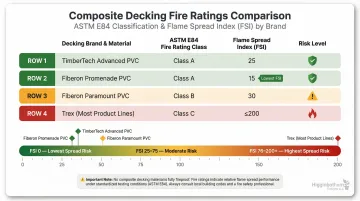
Important caveat: While Class A materials resist flame spread better than Class C, ASTM E84 is an interior tunnel test that doesn't fully replicate outdoor radiant heat or direct ember exposure. No composite decking is entirely fireproof—all require protective measures when fire pits are placed nearby.
Stone and Paver Landing Pads
Integrating a stone or paver landing pad directly into your deck design creates a non-combustible surface that significantly reduces ignition risk while adding visual definition to the space. Belgard hardscape pavers—made of concrete and meeting ASTM C-936 standards—are a practical choice for designated fire pit zones.
As a Belgard Authorized Contractor, Higginbotham Design has access to exclusive materials, specialized installation training, and manufacturer warranties. They can design a paver landing pad sized and positioned to match your deck layout and fire pit placement.
Design options:
- Circular paver inlay (6-8 feet diameter) centered on the fire pit location
- Rectangular hardscape section connecting deck to patio
- Multi-level design with paver lower level as fire pit zone
Important note: While Belgard pavers are non-combustible, the company explicitly warns they are "not fireproof" under extreme heat. For permanent masonry fire pit kits, always use a metal liner or fire-rated brick interior, and never place heavy masonry units on elevated wooden decks.
Heat Shields and Under-Deck Protection
For any fire pit placed directly on a deck surface—even composite or PVC decking—add a heat-resistant mat or pad as an extra layer of protection. Effective systems include:
- DeckProtect System: Aluminum tray with basalt insulation, rated for radiant heat from 800°F fire pits; uses rubber feet to create vital air gap
- Ceramic fiber board: Industrial insulation rated to 2,300-3,000°F; often used as backup layer
- Multi-layer heat shields: Combine insulation with air gaps to prevent heat transfer
The air gap is critical—without it, even high-temperature materials can transfer enough heat to soften composite plastics or cause wood to smolder.
Design Tips to Complete Your Outdoor Gathering Space
A fire pit anchors the space, but the right design details turn a deck into a true outdoor room. Seating, lighting, and finishing touches all work together to make it feel complete.
Seating Arrangement
Circular or semi-circular seating creates an intimate gathering zone. Options include:
- Weather-resistant Adirondack chairs or deep-seat lounge furniture
- Built-in bench seating integrated into deck railings or retaining walls
- Stone seating walls that double as retaining walls around the fire pit zone
Leave adequate walkway clearance—at least 3 feet between seating and the flame for safety and comfort.
Layered Outdoor Lighting
Enhance evening ambiance without competing with the fire's glow:
- String lights overhead for soft, diffused illumination
- Low-voltage path lighting along deck edges for safety
- Landscape lighting in surrounding garden beds to frame the space
- Uplighting on nearby trees or architectural features
Complementary Elements
Complete the space with finishing touches:
- Side tables for drinks and snacks (fire-resistant materials like metal or stone)
- Outdoor rug placed at safe distance from pit (minimum 3 feet)
- Weatherproof throw blankets in a storage basket
- Potted plants or landscaping to soften hardscape edges
Getting these details right alongside the fire pit itself is where professional design pays off. Higginbotham Design has spent over 35 years helping Marietta homeowners bring these elements together — from Belgard hardscape materials to landscape lighting — into spaces that work beautifully season after season.
When to Bring in a Professional for Your Deck Fire Pit Project
Some fire pit projects are DIY-friendly; others require professional expertise to ensure safety and compliance.
When professional help is essential:
- Extending natural gas lines requires a licensed plumber, trenching work, and mechanical permits in Marietta and Cobb County
- Structural changes — like reinforcing deck framing or adding a lower fire pit zone — need engineered load assessments
- Local fire ordinances set specific clearance and material requirements that must be met before any inspection
- Custom built-ins (stone surrounds, integrated seating walls, multi-level decks) involve trade coordination beyond typical DIY scope
When a project crosses into any of these categories, working with an experienced hardscape contractor saves time, prevents costly mistakes, and keeps your project code-compliant. Higginbotham Design handles fire pit projects from concept through final inspection, designing each space as part of a complete outdoor living plan. As a Belgard Authorized Contractor, they bring access to premium materials, certified installation standards, and warranties most contractors can't offer.
Their process covers:
- Custom design tailored to your property and preferences
- Permit application and inspection coordination
- Professional gas line coordination (when applicable)
- Integration with existing or new hardscape features
- Access to exclusive Belgard warranties
For homeowners in Marietta and surrounding areas within a 20-mile radius, Higginbotham Design offers free consultations to discuss your fire pit vision and provide detailed project planning. Call (770) 547-5524 to book your free consultation.
Frequently Asked Questions
Can you put a fire pit on a deck?
Yes, you can place a fire pit on a deck with the right precautions. Gas and propane options are safer for direct deck placement because they produce no embers or ash. Wood-burning pits require extra protective measures—heat shields, spark screens, and larger clearances—or are better placed on adjacent hardscape surfaces.
How far away should a fire pit be from a deck?
The commonly recommended minimum is 10 feet from any structure, but local codes vary. Cobb County requires 25 feet for recreational fires, and the International Fire Code mandates 15 feet for portable outdoor fireplaces. Always confirm local Marietta/Cobb County requirements and follow your fire pit's manufacturer clearances.
What type of fire pit is safest for a wood deck?
Gas and propane fire pits are the safest options for wood decks—no embers, no ash, and instant shutoff control. Always place a heat-resistant mat beneath the unit and confirm the model is CSA or ANSI Z21.97 certified for outdoor use.
What should I put under a fire pit on a deck?
At minimum, use a fire-resistant deck protector mat or heat shield pad with an air gap beneath any fire pit on a deck surface. For permanent installations, a non-combustible paver or stone landing pad integrated into the deck design offers the most durable and safest solution.
Do I need a permit to install a fire pit on my deck in Georgia?
Permanent natural gas fire pit installations typically require a mechanical permit in Marietta and Cobb County. Local codes may also include open-flame restrictions or inspection requirements. Check with your local building department before installation to avoid fines.
Should I choose a gas or wood-burning fire pit for my deck?
Gas is the practical choice for direct deck placement—easy to control, no cleanup, and minimal safety barriers required. Wood-burning delivers authentic ambiance and crackling sounds, but those benefits come with spark screens, larger clearances, and heat shields. If you want fire on the deck itself, go gas; if ambiance is the priority, consider a wood-burning pit on an adjacent patio or ground-level surface instead.