
Introduction
Picture azaleas lining a Marietta driveway in April, their vibrant pink blooms announcing spring's arrival. Fast-forward to January, and camellias take center stage, brightening winter's gray days with glossy white flowers. Flowering shrubs deliver this kind of visual impact across Georgia home landscapes—but only when you choose the right ones.
Georgia homeowners face real challenges: heavy red clay soil, humid summers that invite fungal diseases, and a climate that spans USDA Zones 6–9 statewide.
Metro Atlanta and Marietta sit in Zones 7b–8a—warm enough for Southern classics like gardenias, but cold enough to damage tropical imports during winter snaps. Plant the wrong shrub, and you'll waste money on a specimen that struggles or dies within a season.
TLDR
- Metro Atlanta falls in USDA Zones 7b–8a, giving homeowners a specific range of shrubs that thrive reliably
- Top performers combine heat tolerance, adaptability to acidic or clay-heavy soil, and multi-season interest
- Best picks include azaleas, oakleaf hydrangeas, camellias, crapemyrtle, gardenias, loropetalum, and Knock Out roses
- Choose by bloom season—not just appearance—to achieve color from late winter through fall
- Red clay planting requires above-grade placement and native soil backfill to prevent root rot
Why Georgia's Climate Shapes Your Shrub Choices
Hardiness Zones Define What Survives Winter
The metro Atlanta and Marietta area falls squarely in USDA Plant Hardiness Zones 7b and 8a, where average annual minimum temperatures range from 5°F to 15°F. This zone placement is warm enough to support many Southern landscape staples—gardenias, camellias, evergreen azaleas—but cold enough that winter freezes can damage marginally hardy tropicals. Georgia's northern mountains reach Zone 6, while the coast stretches to Zone 9, making zone-checking essential before purchasing any shrub.
Red Clay Soil: Compaction and Drainage Challenges
Georgia's Piedmont region—which includes Marietta—is notorious for exposed red clay subsoils left behind after topsoil removal during grading. This clay becomes rock-hard in summer heat and holds excessive water during rainy winters, suffocating plant roots.
University of Georgia (UGA) Extension warns that adding compost to individual planting holes creates a "sponge in a bowl" effect, trapping water and causing root rot—backfill with native soil instead. On the upside, Georgia's naturally acidic pH (typically 5.0–6.5) suits acid-loving shrubs like azaleas, hydrangeas, and gardenias, which thrive in soils below pH 6.0.
Long, Humid Summers Create Opportunities and Risks
Georgia's extended growing season and mild winters support a wide variety of shrubs and allow plants to establish quickly. But humid summers come with real trade-offs.
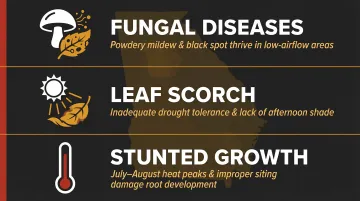
Watch for these common summer challenges:
- Fungal diseases like powdery mildew and black spot, especially in low-airflow or shaded spots
- Leaf scorch on shrubs without adequate drought tolerance or afternoon shade
- Stunted growth during July and August heat peaks if plants aren't properly sited
Best Flowering Shrubs for Georgia Gardens
These seven shrubs are proven performers across the Marietta and metro Atlanta area, selected for reliable blooms, soil adaptability, and value across multiple seasons. They're organized roughly by bloom season, from early spring through fall.
Azalea (Rhododendron spp.)
Georgia's state wildflower since 1979, azaleas are the most iconic spring-blooming shrub in the state. Native deciduous varieties like Rhododendron canescens (Piedmont Azalea) and popular evergreen hybrids produce trumpet-shaped blooms in pink, red, white, and coral from March through May. They thrive in partial shade—ideally morning sun and afternoon shade—with acidic, well-drained soil.
Critical requirement: Azaleas planted in soils with pH above 6.0 develop iron deficiency, showing as yellowing leaves. UGA Extension confirms this is the most common cause of azalea failure in Georgia landscapes.
| Attribute | Details |
|---|---|
| Bloom Season | Spring (March–May) |
| Sun & Soil | Partial shade; acidic soil (pH 4.5–6.0), well-drained |
| Mature Size / Hardiness | 3–8 ft tall; Zones 6–9 |
Oakleaf Hydrangea (Hydrangea quercifolia)
This Georgia-native shrub delivers four-season interest: large white cone-shaped flower clusters in late spring and summer, burgundy oak-leaf foliage in fall, and attractive peeling cinnamon bark in winter. Unlike other hydrangeas, it tolerates both shade and drought once established, making it ideal for Georgia's variable conditions.
Oakleaf hydrangea performs well in full sun to full shade, though flowering is most prolific with morning sun. It's one of the few hydrangeas that doesn't require constant moisture after the first year.
| Attribute | Details |
|---|---|
| Bloom Season | Late spring–summer (May–July) |
| Sun & Soil | Full sun to full shade; moist, acidic, well-drained soil |
| Mature Size / Hardiness | 6–8 ft tall; Zones 5–9 |
Camellia (Camellia japonica / sasanqua)
Camellias are Southern landscape staples with deep Georgia roots—the American Camellia Society is headquartered in Fort Valley, Georgia. These evergreen shrubs offer glossy foliage year-round and blooms in white, pink, and red.
The key to year-round camellia color: plant both species. Camellia sasanqua blooms fall to early winter (October–December), while Camellia japonica blooms late winter to spring (January–April). This sequencing provides rare off-season color when most shrubs are dormant.
Site selection matters: Both species require well-drained, acidic soil and cannot tolerate "wet feet." Plant C. sasanqua in locations with more sun tolerance; C. japonica requires partial shade and protection from harsh winter sun to prevent bud damage.
| Attribute | Details |
|---|---|
| Bloom Season | Sasanqua: Oct–Dec; Japonica: Jan–April |
| Sun & Soil | Partial shade (sasanqua tolerates more sun); acidic, well-drained soil |
| Mature Size / Hardiness | 8–15 ft; Zones 7–9 |
Crapemyrtle (Lagerstroemia indica)
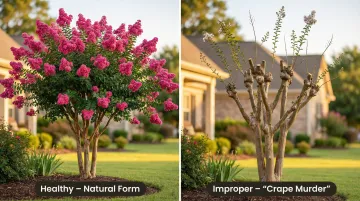
UGA Extension calls crapemyrtle "one of the most useful flowering shrubs/trees grown in Georgia." They produce showy blooms in red, pink, lavender, and white from June through September, develop attractive exfoliating bark in winter, and handle Georgia's full sun and summer heat better than almost any other ornamental. They tolerate clay soil and drought once established.
Avoid "crape murder": UGA explicitly warns against severe topping, which creates weak shoots unable to support blooms, increases suckering (attracting aphids and powdery mildew), ruins natural bark, and can expose trees to lethal ambrosia beetles. Choose the right size variety for the space to eliminate the perceived need for over-pruning.
| Attribute | Details |
|---|---|
| Bloom Season | Summer (June–September) |
| Sun & Soil | Full sun; tolerates clay and drought once established |
| Mature Size / Hardiness | 3–30 ft depending on variety; Zones 6–9 |
Gardenia (Gardenia jasminoides)
Gardenias produce intensely fragrant white summer blooms and hold their glossy dark green foliage year-round. Georgia's warm, humid climate suits them well—plant them near patios, entries, or outdoor living areas where the fragrance makes the most impact.
Gardenias require acidic soil (pH 5.0–6.5) and are highly prone to iron chlorosis (yellowing leaves) if pH exceeds 6.0. Avoid planting near new concrete foundations that leach lime into the soil.
| Attribute | Details |
|---|---|
| Bloom Season | Late spring–summer (May–July) |
| Sun & Soil | Full sun to partial shade; acidic, moist, well-drained (pH 5.0–6.5) |
| Mature Size / Hardiness | 3–6 ft; Zones 7–11 |
Loropetalum (Loropetalum chinense)
Chinese fringe flower has become a Georgia landscape favorite for its fringy hot-pink or white spring flowers and year-round burgundy or green foliage. Clemson HGIC highlights it as one of the Southeast's most reliable landscape shrubs, performing in full sun to part shade with minimal fuss.
This fast-growing evergreen tolerates a range of soil types, including clay, making it one of the most adaptable options here. It works well as a hedge, foundation plant, or specimen shrub, with varieties ranging from 3-foot dwarfs to 15-foot screening plants.
| Attribute | Details |
|---|---|
| Bloom Season | Spring (March–April), with sporadic rebloom |
| Sun & Soil | Full sun to partial shade; tolerates clay |
| Mature Size / Hardiness | 3–15 ft depending on variety; Zones 7–10 |
Knock Out Rose (Rosa 'Radrazz')
Knock Out roses are the answer for homeowners who want continuous bloom from spring through fall with minimal care. They re-bloom every 5–6 weeks from April through frost, resist black spot and common rose diseases that plague Georgia's humid summers, and come in red, pink, yellow, and coral.
These are among the easiest flowering shrubs to grow in Georgia, requiring only basic pruning in late winter and feeding in early spring. They adapt to clay soil as long as drainage is adequate and need full sun (6+ hours daily) to perform best.
| Attribute | Details |
|---|---|
| Bloom Season | Spring through fall (April–November) |
| Sun & Soil | Full sun (6+ hours); adaptable to clay, well-drained preferred |
| Mature Size / Hardiness | 3–4 ft; Zones 5–9 |
Planning for Year-Round Color in Your Georgia Yard
Layered Bloom Succession: The Key to Continuous Color
The secret to a landscape that delivers color from late winter through fall is intentional "layered bloom succession"—selecting 3–4 shrubs with staggered bloom times so something is always flowering.
Seasonal bloom map for metro Atlanta:
- Winter–Spring: Camellias (japonica), azaleas, loropetalum
- Early Summer: Gardenias, oakleaf hydrangeas
- Mid to Late Summer: Crapemyrtle, Knock Out roses
- Fall: Sasanqua camellias, Knock Out roses (still blooming)
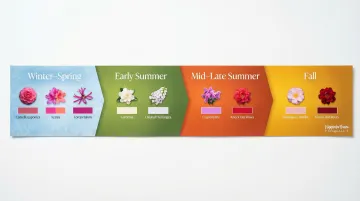
By choosing one shrub from each category, you guarantee your yard is never without active color. Once your bloom timeline is mapped, the next step is arranging plants so they're all visible at once.
Layer Shrubs by Height for Visual Depth
Arrange shrubs in planting beds by mature height to create depth and ensure no plant is hidden:
- Background (6–15 ft): Crapemyrtle, camellia, oakleaf hydrangea
- Middle (3–6 ft): Gardenia, loropetalum
- Front (2–4 ft): Knock Out rose, dwarf azaleas
This tiered approach mimics natural woodland edges and makes each plant visible from the street or patio.
Color Cohesion Matters
Choose 2–3 complementary bloom colors for a cohesive look rather than planting every color at once, which will look chaotic. For example:
- Pink azaleas + white gardenias + red Knock Out roses
- White camellias + burgundy loropetalum foliage + lavender crapemyrtle
If you're designing a full shrub layout from scratch, a local landscape professional can take the guesswork out of plant selection. Higginbotham Design has worked with Marietta-area properties for over 35 years and knows which combinations perform in Georgia's soil conditions and sun exposures—translating that into a planting plan built around your specific yard.
How to Plant and Care for Flowering Shrubs in Georgia
Best Planting Windows: Fall First, Spring Second
UGA Extension recommends fall (September–November) as the ideal planting window in Georgia because mild temperatures allow roots to establish during dormant months before summer heat stress. Early spring (February–March) is a secondary option. Avoid summer planting, which requires intensive irrigation and is the most common cause of new shrub failure.
Soil Preparation for Georgia's Red Clay
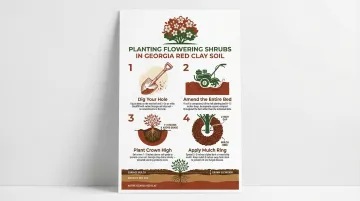
Critical rule: Do not add compost to individual planting holes in clay. UGA explicitly warns this creates a "sponge in a bowl" effect, trapping water and causing root rot. Instead:
- Backfill holes with native soil
- If amendments are necessary, incorporate them across the entire planting bed by tilling to 8–12 inches deep
- Plant shrubs slightly above grade—crown should sit 1–2 inches above soil level to prevent root rot
- Mulch 2–3 inches deep (pine straw or bark), keeping mulch away from stems to prevent rot
Fertilizing, Pruning, and Watering Guidelines
Once your shrubs are in the ground, the right care routine keeps them thriving through Georgia's climate extremes:
- Fertilize in early spring after establishment using a slow-release, acid-forming fertilizer
- Prune spring bloomers (azaleas, loropetalum, oakleaf hydrangea) immediately after flowering to avoid cutting off next year's buds
- Prune summer bloomers (crapemyrtle, Knock Out roses) in late winter while dormant
- Water deeply throughout the first growing season to establish roots — once established, most of these shrubs handle Georgia's summer heat with little to no supplemental watering
Conclusion
Georgia's climate is genuinely well-suited for a spectacular array of flowering shrubs—the key is matching plant to place. Understanding your yard's sun exposure, soil pH, and drainage before buying prevents costly mistakes and disappointing results.
If you want professional guidance on which shrubs will thrive in your specific yard, Higginbotham Design offers landscape consultations for homeowners across the Marietta area. With over 35 years of local experience, the team can help you select, design, and install the right plants for your property's conditions. Call (770) 547-5524 to schedule your free consultation.
Frequently Asked Questions
What is a flowering bush that blooms all summer?
Knock Out roses and crapemyrtle are top choices for all-summer bloom in Georgia. Knock Out roses re-bloom every 5–6 weeks from April through frost, while crapemyrtle blooms continuously from June through September. Both handle Georgia's heat and humidity exceptionally well.
What blooms in Georgia in October?
Sasanqua camellias are the star October performers, blooming from September through December. Knock Out roses continue blooming into fall, often until the first hard frost in November. Some loropetalum varieties also produce sporadic fall rebloom.
What is the easiest flowering bush to grow?
Knock Out roses and crapemyrtle are the easiest choices, offering strong disease resistance, drought tolerance once established, and minimal pruning needs. Loropetalum runs a close third — it adapts readily to various soil types, including clay.
What shrubs grow best in Georgia's clay soil?
Crapemyrtle, loropetalum, and Knock Out roses handle clay best. For finicky plants like gardenias and azaleas, amend with compost across the entire bed (not just the hole) and plant slightly above grade to improve drainage.
When is the best time to plant flowering shrubs in Georgia?
Fall (September–November) is the ideal window — mild temperatures let roots establish before summer heat arrives. Early spring (February–March) works as a backup. Avoid summer planting, which raises failure rates sharply due to heat and drought stress on new transplants.
Do azaleas grow well in the Marietta, GA area?
Yes, azaleas thrive in the Marietta area (Zones 7b–8a). The naturally acidic, partly shaded conditions under pine and hardwood trees mirror their preferred habitat, making them one of the most reliable spring-blooming shrubs in the region. Just ensure soil pH stays below 6.0 to prevent iron deficiency.