Introduction
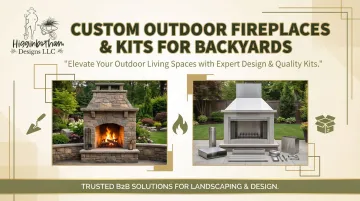
Georgia's mild winters mean your backyard could be usable 10 months out of the year — but without a heat source, most patios sit empty the moment temperatures dip below 55°F. A custom outdoor fireplace changes that equation. For Marietta homeowners, it means hosting on crisp November evenings, letting the kids roast marshmallows in February, and getting real value from every square foot of outdoor space. According to the American Society of Landscape Architects, fire features consistently rank among the top outdoor amenity requests from residential clients.
This guide walks through what to consider before building: fireplace types and kit options, design styles, placement, fuel choices, and the planning decisions that determine whether your project succeeds or stalls.
Key Takeaways
- Custom fireplaces offer unlimited design flexibility — prefab kits trade that for faster installs and lower upfront cost
- Wood-burning, gas, and propane each come with real trade-offs in convenience, ambiance, and upkeep
- Design should complement your home's architecture and existing hardscape materials
- Proper foundation work is non-negotiable—skipping footings leads to settling and cracking
- Marietta and Cobb County require permits for permanent outdoor fireplaces — pull them before breaking ground
Why a Backyard Fireplace Makes Sense in Marietta
Marietta's climate is uniquely suited for outdoor living investments. According to NOAA's 1991-2020 Climate Normals, the Atlanta area enjoys eight months of comfortable outdoor temperatures annually—from February through May and September through December—far exceeding northern markets like Chicago.
The return on investment is concrete. Outdoor fire features check both boxes for Marietta homeowners:
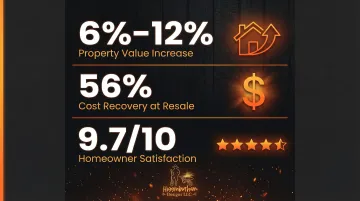
- Built-in fireplaces increase property valuations by 6% to 12%, according to industry analysis
- The National Association of Realtors reports a 56% cost recovery at resale
- Homeowner satisfaction scores hit 9.7 out of 10 — among the highest of any outdoor project
That financial case pairs with a practical advantage: Georgia's mild winters open up more design options. Without heavy snow loads or freeze-thaw cycles, you can build with natural stone, smooth stucco, or brick without the durability constraints that force northern homeowners to limit their choices.
Types of Outdoor Fireplaces: Custom Builds vs. Prefab Kits
Fully Custom Outdoor Fireplaces
Custom fireplaces are designed and built entirely on-site using materials like natural stone, brick, or Belgard hardscape products. They're tailored to match your home's architecture, existing patio pavers, and your specific vision for the space.
Advantages:
- Unlimited design flexibility—shape, size, and materials are fully customizable
- Seamless integration with seating walls, storage niches, pizza ovens, or outdoor kitchens
- Cohesive aesthetic with the rest of your outdoor space
Trade-offs:
- Higher cost: $2,800–$21,000+ depending on materials and complexity
- Longer timeline: custom masonry work requires skilled labor and curing time
For Marietta homeowners, working with an authorized contractor like Higginbotham Design means your fireplace, patio pavers, and seating walls can all draw from the same color palette and texture — a cohesion that's hard to achieve any other way.
Prefabricated Fireplace Kits
Prefab kits arrive partially or fully pre-formed, then get veneered with stone, brick, or stucco on-site. For homeowners who want a finished fireplace without the custom build timeline or price tag, they're a practical starting point.
Key benefits:
- Cost-effective: $1,200–$8,335 for most kits
- Faster installation timeline
- Choose from stone, brick, or stucco veneers to match your existing patio aesthetic
Even "DIY-friendly" kits require professional help for foundation work, gas line connections, and code compliance. A licensed local contractor ensures your fireplace is properly supported, safely connected, and legally permitted — avoiding costly rework down the line.
Popular Design Styles for Backyard Fireplaces
Rustic and Natural Stone
Irregular fieldstone or stacked stone in warm earth tones, often paired with a heavy wooden mantel, is a strong fit for Marietta's wooded residential lots and traditional home styles. The textured, organic finish holds up visually year-round and weathers gracefully in the Georgia climate.
Modern and Contemporary
Clean lines, smooth concrete or stucco finishes, and linear fireboxes with minimal ornamentation. This style works especially well with newer construction and geometric paver patio layouts — the fireplace becomes an architectural statement rather than an afterthought.
Integrated Multi-Feature Designs
The most requested upgrade among Marietta homeowners is a fireplace anchored to an outdoor kitchen on one side and built-in seating walls on the other. Rather than a standalone feature, this approach creates a true outdoor room with a clear focal point.
Coordinating With Your Existing Outdoor Space
A fireplace that clashes with your patio or home exterior undercuts the whole investment. Two principles help avoid that:
- Match your hardscape: If your patio uses Belgard pavers in a specific color or texture, pull from the same palette for your fireplace surround
- Echo your home's facade: Brick homes pair naturally with stone or brick fireplaces; stucco exteriors suit smooth plaster or concrete finishes
- Aim for harmony, not exact replication: The materials should feel related, not identical
Where to Place Your Outdoor Fireplace in the Backyard
The right placement depends on your yard's layout, how you use the space, and what kind of atmosphere you want to create. Three locations tend to work best for most backyards:
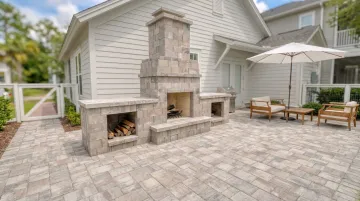
- Covered patio or pergola end wall — Anchors the structure as a true outdoor room, protects from light rain, and contains warmth more effectively than open-air placement.
- Open patio centerpiece or corner — A freestanding fireplace at the back edge of a paver patio creates a natural gathering zone. Corner placement works especially well on smaller lots.
For homeowners who entertain regularly, pairing the fireplace with an outdoor kitchen is worth serious consideration. Whether they share the same built structure or sit as coordinated features, the two work together to define a complete outdoor living area. This kind of layout does require professional design to handle gas lines, traffic flow, and sightlines properly.
Key Design and Planning Considerations Before You Build
Fuel Type Decision: Wood vs. Gas vs. Propane
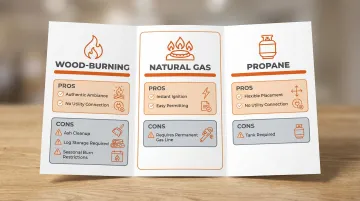
Wood-Burning:
- Authentic ambiance and crackling sound
- Requires log storage and ash cleanup
- Note: Cobb County allows recreational fires year-round, though Georgia's Summer Burn Ban (May 1–September 30) applies to some burning activities
Natural Gas:
- Convenient—flip a switch and you have fire
- Requires permanent gas line installation (professional work)
- Easier to permit in most jurisdictions
Propane:
- Flexible placement—no permanent utility connection needed
- Requires a propane tank (can be concealed in the design)
- Good option if natural gas isn't available
Regardless of fuel type, Marietta requires building permits for permanent outdoor fireplaces, and all gas line installations must be tested at 15 PSI and inspected before approval.
Foundation and Structural Requirements
Outdoor fireplaces are heavy structures that require proper concrete footings. The International Residential Code mandates footings at least 12 inches thick, extending at least 6 inches beyond the fireplace on all sides, founded on undisturbed earth below the frost line.
Skipping this step is the leading cause of masonry failure. Without adequate support, a fireplace settles at a different rate than surrounding hardscape — leading to cracking, structural damage, and repairs that cost far more than getting the footing right the first time.
Material Selection and Durability
Materials must withstand Georgia's humid summers, temperature swings, and outdoor moisture exposure. Belgard's certified hardscape products are built for outdoor use and backed by manufacturer warranties, which is a meaningful protection when the materials are installed by an authorized contractor like Higginbotham Design.
In Georgia's humid climate, sealing stone or masonry surfaces protects against moisture intrusion and efflorescence — the white calcium deposits that naturally develop on concrete products over time.
Sizing the Fireplace to the Space
A fireplace that's too large overwhelms a small patio; one that's too small feels underwhelming and fails to produce enough radiant heat for the seating area.
IRC sizing requirements to know:
- Round chimney flues must have a minimum cross-sectional area of 1/12 of the fireplace opening
- Firebox depth must be at least 20 inches to safely contain logs and embers
- Chimney height typically exceeds indoor minimums for outdoor builds — crosswinds require more draw to keep smoke away from seating
A professional installer evaluates your patio layout, prevailing wind patterns, and seating arrangement before recommending dimensions — details that vary enough from property to property that standard formulas rarely tell the whole story.
Frequently Asked Questions
What is the difference between a prefabricated fireplace kit and a custom-built outdoor fireplace?
Kits arrive pre-formed and get finished with veneer on-site, offering faster installation at lower cost ($1,200–$8,335). Custom builds are designed and constructed entirely from scratch, providing unlimited design flexibility but at higher cost ($2,800–$21,000+) and longer timelines.
Do I need a permit to build an outdoor fireplace in Marietta, GA?
Yes. Most permanent outdoor fireplaces in Georgia require a building permit, and wood-burning units may have additional restrictions. Gas line installations must be inspected before approval. Consult with a licensed local contractor familiar with Cobb County and Marietta codes.
Is wood-burning or gas better for an outdoor fireplace in Georgia?
Both work well in Georgia's climate. Gas is more convenient and typically easier to permit, while wood-burning delivers traditional ambiance. If natural gas is already available at your property, gas is often the simpler path — otherwise, wood-burning gives you more site flexibility.
How much does a custom outdoor fireplace cost?
The biggest cost drivers are size, materials, fuel type, and site conditions. See the first question above for the full price breakdown by project type — a site visit is the most reliable way to get an accurate number for your backyard.
Will an outdoor fireplace add value to my home?
Yes. Built-in fireplaces are permanent architectural assets that increase property valuations by 6% to 12%. Outdoor fire features also deliver a 56% cost recovery at resale and receive near-perfect homeowner satisfaction scores, especially when part of a cohesive hardscape design.
How do I maintain an outdoor fireplace?
For wood-burning units, remove ash after each use and schedule an annual chimney inspection. For gas units, check connections and clean the burner and screen seasonally. Sealing stone or masonry surfaces helps protect against moisture in Georgia's humid climate.