Introduction
Picture two homes on the same street: one draws every passerby's eye, while the other fades into the background. The difference rarely comes down to luck or budget—it's intentional landscaping choices that create that head-turning effect.
Curb appeal landscaping means designing your home's exterior to make a strong first impression from the street. According to the National Association of REALTORS® 2023 report, 97% of real estate professionals consider it critical when attracting buyers, and 92% recommend improvements before listing.
This guide covers five categories of curb appeal upgrades—strategic plant choices, hardscape features, landscape lighting, finishing accents, and design principles—so whether you're preparing to sell or simply want to love what you come home to, you'll find ideas with real, measurable impact.
TLDR:
- Standard lawn care delivers a 217% ROI—the highest return of any exterior upgrade
- Plants like loropetalum and crape myrtle thrive year-round in Marietta's Zone 8a climate
- Belgard paver walkways recover 100% of installation costs at resale
- Landscape lighting featured in listings correlates with homes selling 3.1 days faster
- The Rule of Three and six design principles create professional-looking cohesion
What Is Curb Appeal in Landscaping?
Curb appeal in landscaping refers to the visual impression your home makes from the street. It encompasses lawn condition, plant arrangement, hardscape elements like walkways and driveways, and lighting—everything a visitor or passerby sees before reaching your front door.
Beyond aesthetics, curb appeal directly affects property value and neighborhood perception. Research from the National Association of REALTORS® shows that standard lawn care service recovers 217% of its cost, while landscape maintenance recoups 104%—making these among the highest-return home improvements available.
The difference between average and exceptional curb appeal comes down to a few key factors:
- Maintenance consistency — regular upkeep keeps the yard looking intentional, not neglected
- Deliberate design choices — plant placement, color, and scale that work together visually
- Climate-appropriate plant selection — species that thrive locally with less intervention
- Hardscape integration — walkways, edging, and driveways that frame the landscape
A well-executed front yard signals pride of ownership and can add thousands to perceived home value, even before a buyer steps inside.
Plant-Based Curb Appeal Ideas That Make an Immediate Impact
Anchor Trees and Layered Shrubs
A single focal-point tree transforms a flat front yard into a dimensional landscape. In Marietta's Zone 8a climate, flowering dogwood (Cornus florida) and crape myrtle (Lagerstroemia spp.) are ideal choices—both offer seasonal interest with spring blooms and fall color while tolerating Georgia's heat and humidity.
Layer shrubs of varying heights in front beds to create depth. Place taller specimens like loropetalum (6-8 feet) at corners to frame the house, mid-height shrubs like knockout roses (2-4 feet) in the middle ground, and low-growing plants like creeping gardenia (18-24 inches) along borders. This tiered approach guides the eye naturally toward your entry.
Seasonal Color with Flowering Plants
Strategically placed perennials deliver rotating color without annual replanting. Black-eyed Susans (Rudbeckia hirta) bloom from early summer through fall, while coneflowers provide drought tolerance and pollinator appeal. For fragrance near entries, gardenias thrive in Zones 7b and 8.
Mix perennials with seasonal annuals in high-visibility spots—flanking the mailbox, bordering the walkway, or filling window boxes. This combination ensures continuous color while keeping maintenance manageable.
Healthy, Well-Maintained Lawn
A lush, evenly mowed, properly edged lawn is the single most visible component of curb appeal. The NAR 2023 data confirms that standard lawn care service—six seasonal fertilizer and weed control applications on 5,000 square feet—costs approximately $415 but recovers $900 in perceived value, a 217% return.
Core aeration, overseeding with fescue or Bermuda grass, and treating bare patches pay immediate dividends. Sharp edging between lawn and beds signals attention to detail that buyers and neighbors notice right away.
Window Boxes and Container Plantings
Window boxes and flanking door planters add vertical interest and color at eye level. Matching containers on both sides of the entry create symmetry—a design principle that reads as polished to anyone who sees it.
Size containers proportionally to your door and windows, fill with heat-tolerant annuals like petunias or coleus, and refresh each season. Because the entry is where attention focuses first, this is one of the highest-return investments you can make for street-level presentation.
Georgia-Climate Plant Considerations
Marietta falls within USDA Hardiness Zone 8a (10°F to 15°F minimum winter temperature) as of the 2023 update. Choosing plants rated for Zones 7b–8a ensures year-round performance without replacement.
Top low-maintenance, heat-tolerant options:
- Loropetalum (L. chinense var. rubrum) – Frames corners with ruby-red foliage and pink spring blooms; grows 6-8 feet
- Knockout roses – Add continuous summer color at 2-4 feet with no spray program needed
- Ornamental grasses (Panicum, Pennisetum) – Bring texture and seasonal movement with almost no upkeep
- Crape myrtle – Delivers summer blooms and sculptural winter bark; select cultivar by space (4-25 feet)
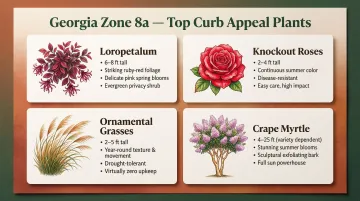
These selections thrive in Georgia's humid summers and mild winters, reducing water needs and maintenance while maintaining visual appeal across all seasons.
Hardscape Features That Elevate Curb Appeal
Walkways and Front Pathways
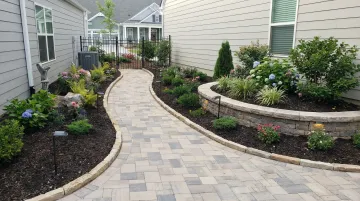
A clearly defined pathway from street to front door anchors the whole front yard and tells visitors exactly where to go. The visual difference between plain concrete and a well-designed paver walkway is striking—pavers offer varied textures, colors, and patterns that add architectural interest.
NAR research shows that landscape upgrades including natural flagstone walkways recover 100% of their $9,000 estimated cost. Belgard pavers, available through authorized contractors like Higginbotham Design, provide durable options in varied textures, finishes, and patterns with lifetime transferable warranties when installed to manufacturer standards.
Driveway Upgrades
Driveways occupy significant front-facade real estate. Upgrading from cracked concrete to interlocking pavers, fresh sealing, or decorative edging makes an immediate impression from the street and raises the overall quality of the home's exterior.
Pavers resist cracking better than poured concrete and allow individual stone replacement if damage occurs. A new concrete paver patio recovers 95% of its $10,500 cost, and driveway pavers follow similar value trajectories while offering superior longevity.
Landscape Edging and Defined Beds
Clean, sharp edging between lawn and planting beds signals a well-maintained property. Steel, stone, or brick edging frames plantings to look intentional rather than accidental.
Edging also delivers practical benefits:
- Prevents grass from creeping into planting beds
- Reduces trimming time along bed borders
- Makes even modest plantings look more deliberate and polished
Retaining Walls and Raised Planters
Low retaining walls or raised stone planting beds add dimension to flat front yards and create distinct zones. These hardscape elements give the overall design a more architectural, finished appearance.
Higginbotham Design specializes in retaining walls and garden walls that handle erosion control alongside visual design. As a Belgard Authorized Contractor with over 35 years serving the Marietta area, their certified installations carry manufacturer-backed warranties built to hold up through Georgia's climate.
Landscape Lighting to Extend Your Home's Curb Appeal Into the Night
Pathway and Walkway Lighting
Low-voltage or solar stake lights along walkways improve safety while keeping the home looking polished after dark. Stagger placement for a natural effect rather than a rigid straight line; uneven spacing reads as intentional design, not an afterthought.
Pathway lighting costs less than $50 per fixture at major retailers, making it one of the most affordable high-impact upgrades available.
Uplighting Trees and Architectural Features
Spotlights aimed at a focal-point tree, front columns, or textured stone facade add drama and depth. This technique makes a home look professionally designed with clear visual intention.
Position fixtures at the base of trees or architectural elements, angling upward to create shadows and highlight texture. Use warm-white bulbs (2700K–3000K) to avoid harsh, commercial-looking glare.
Entry and Porch Lighting
Once the landscape itself is lit, the entry point ties everything together. Updating or adding exterior light fixtures at the front entry—coordinated with hardware finishes—is a low-effort, high-impact upgrade. Consumer Reports research shows that listings mentioning "outdoor lighting" sell 3.1 days faster and for 1.6% more on average.
Fixture cost ranges (as of March 2026):
- $25–$50: basic black lanterns (Home Depot)
- $57–$70: contemporary sconces (Lowe's)
- $150–$700: designer fixtures (Ferguson)
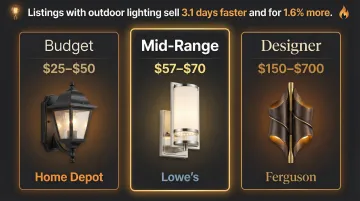
Choose fixtures that complement your home's architectural style—traditional lanterns for Colonial or Craftsman homes, sleek wall sconces for modern designs.
Small Accents That Make a Surprisingly Big Impact
Front Entry Focal Points
Small upgrades to the front door area tie together the broader landscape and make the entry feel deliberate. A bold door color, updated house numbers matched to exterior fixtures, or a simple seasonal wreath create immediate visual interest.
Zillow data indicates that a black front door correlates with an extra $6,000 in sale price compared with similar homes—proof that high-visibility details influence buyer perception.
Mailbox and Address Area
The mailbox is often the first element a passerby sees. A few targeted upgrades go a long way:
- Replace faded numbers with modern, oversized address plaques visible from the street
- Install a new post or coordinated finish to match your exterior hardware
- Add a small planted bed at the base using ornamental grasses or low shrubs
- Keep plantings symmetrical on both sides to anchor the mailbox visually
Arbors, Trellises, and Fencing
A simple arbor over a walkway or partial picket fence flanking the entry adds visual structure and a welcoming frame. Training climbing vines like clematis or jasmine on a trellis fills vertical space and softens hard edges affordably.
Done right, these features cost far less than most hardscape projects while delivering an outsized visual return.
Landscaping Design Principles to Unify the Whole Look
The Rule of Three
Grouping plants, containers, or accents in odd numbers—especially threes—creates visual balance that feels natural rather than rigid. Extension research confirms that the eye cannot easily divide odd-numbered groups in half, making them appear more organic.
Plant three ornamental grasses of the same variety staggered in a triangle rather than a straight line—the arrangement reads as intentional without feeling forced.
Balance, Repetition, and Scale
Repeating one or two plant varieties or colors throughout the front yard creates cohesion. Matching the scale of plants to the size of the home prevents the yard from feeling cluttered or bare.
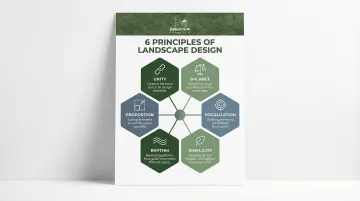
The six core principles of landscape design give homeowners a practical framework for every decision:
- Unity — ties elements together through repeated materials or colors
- Balance — distributes visual weight evenly across the yard
- Proportion — ensures plantings fit the home's scale
- Focalization — directs attention toward the entry
- Rhythm — creates flow through repeated patterns
- Simplicity — avoids clutter and visual noise
Plan for Year-Round Interest
Choose a mix of evergreens, seasonal bloomers, and structural hardscape elements so the yard looks intentional in every season—not just peak summer. This is especially relevant in Georgia's climate, where mild winters still allow for color with the right plant mix.
Good plant selections for Georgia's four-season interest include:
- Loropetalum and other evergreen shrubs for year-round structure
- Crape myrtle for summer blooms and sculptural winter bark
- Ornamental grasses for movement and texture through fall and winter
- Stone walkways and retaining walls that look sharp in any season
Frequently Asked Questions
What is curb appeal in landscaping?
Curb appeal in landscaping refers to how attractive a home's exterior appears from the street, encompassing lawn condition, plantings, hardscape features, and lighting that collectively create the property's first impression.
What plants are best for curb appeal?
The best plants depend on local climate, but a mix of anchor shrubs (like boxwood or loropetalum), flowering perennials, and at least one focal-point tree creates layered, lasting curb appeal. In Georgia, heat-tolerant varieties like knockout roses, crape myrtle, and ornamental grasses perform best.
What is the rule of 3 in landscaping?
The rule of three is a design principle where plants or decor elements are grouped in odd numbers (especially threes) because asymmetrical arrangements appear more natural and visually interesting than even-numbered groupings.
What are the six rules of landscape design?
The six principles are unity, balance, proportion, focalization, rhythm, and simplicity. Together, they help homeowners and designers make cohesive decisions so every front yard element works as a unified whole.
How much value does landscaping add to a home?
According to NAR 2023 data, standard lawn care recovers 217% of cost, landscape maintenance recoups 104%, and overall landscape upgrades recover 100%.
How do I improve curb appeal landscaping on a budget?
Start with high-impact, low-cost wins: edge beds sharply, plant annuals for seasonal color, add pathway lighting, and refresh mulch. Once those basics are in place, you're well positioned to invest in larger hardscape or professional design work.